
Integrative Therapeutic Massage in Frankston: Where Eastern Traditions Meet Western Techniques
Some tension does not respond to a single approach. You might carry stiffness in your shoulders that keeps returning, a stress response that never quite switches off, or a deep sense of holding in the body that a standard massage only touches on the surface. When that is the case, a treatment that works on more than one layer can make a real difference.
Integrative therapeutic massage at Embodied Being in Frankston is designed for exactly this. It blends clinical, Western remedial techniques with traditional Eastern approaches, working across the physical, energetic and nervous system layers of the body. Guided by the intention to "Rebalance, Release, Renew", it is a whole-body treatment for chronic tension, long-term stress and anyone seeking a more connected experience. In this guide, we explain what integrative therapeutic massage involves, the techniques it may include, who it can suit and what you can expect from a session at our Frankston clinic.
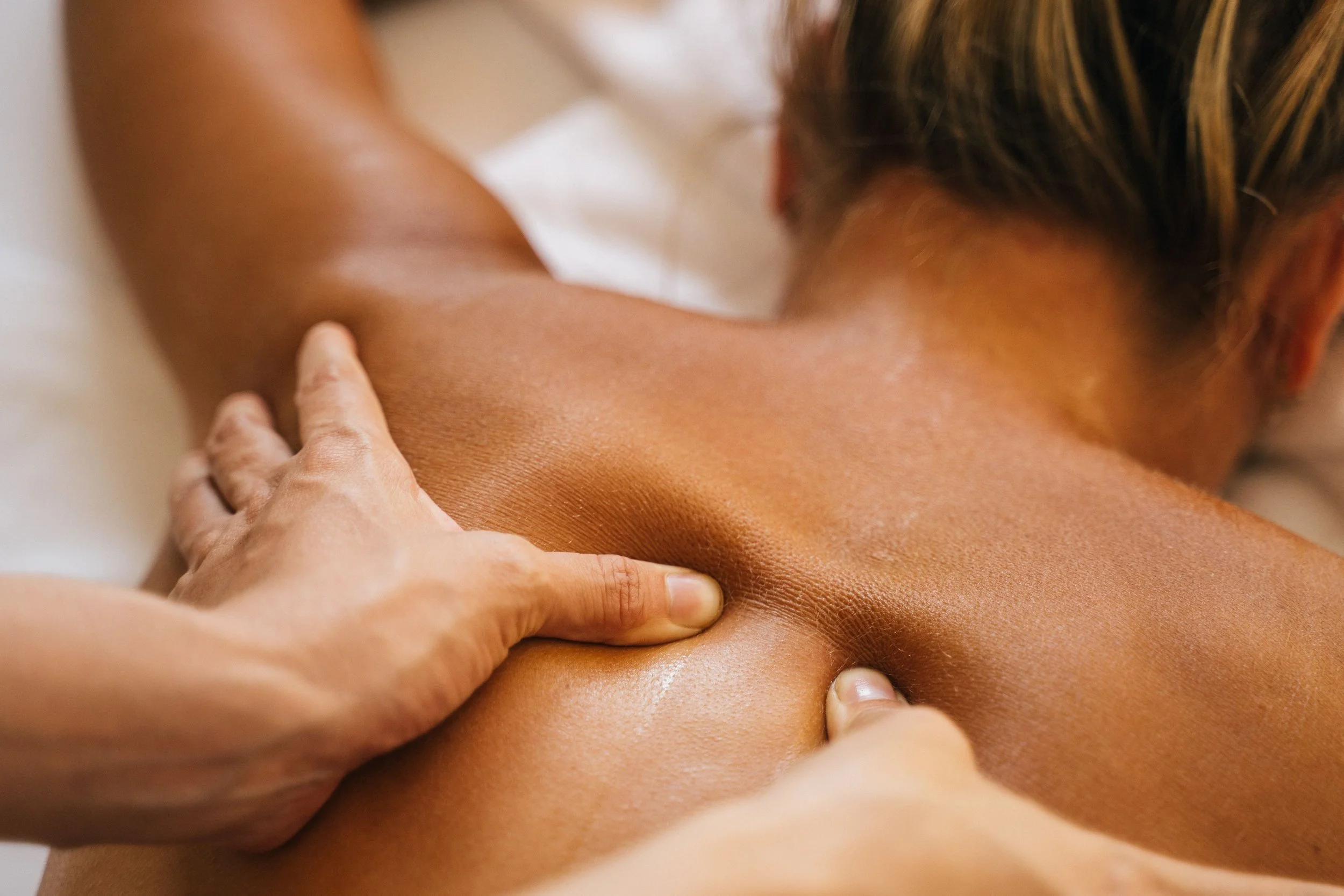
What Is Integrative Therapeutic Massage?
Integrative therapeutic massage is a holistic bodywork session that brings together the best of two worlds. On one side, it includes remedial techniques familiar from Western massage therapy, which target muscular tension and physical dysfunction. On the other, It integrates traditional Eastern practices, which work with the body's energy, breath and deeper patterns of holding.
Rather than treating a single sore spot in isolation, this treatment looks at the whole person. It supports the relief of pain and tension while also addressing the deeper patterns held within the system, the ones that often sit beneath recurring aches and long-term stress.
This makes it a particularly supportive choice for people dealing with chronic conditions, ongoing stress, or a feeling of being disconnected from their own body. If you have tried standard massage and felt that something was still not quite reached, an integrative approach may offer the depth you are looking for.
Bringing Eastern and Western Approaches Together
Embodied Being is a wellness sanctuary that deliberately combines Western science with Eastern holistic traditions. Integrative therapeutic massage is where that philosophy comes to life most fully.
The Western side brings structure and clinical precision. Techniques such as myofascial release and trigger point therapy are used to identify and ease specific areas of muscular tension and restriction.
The Eastern side brings a focus on flow, energy and the nervous system. Working the acupressure points along the body's meridian channels and encouraging a connection with the breath helps the whole system settle, so the body can move out of a state of stress and into one where it is better able to rest and recover.
Brought together in one session, these approaches support not just the muscles, but the way the whole body holds and releases tension.
The Techniques Used in an Integrative Therapeutic Massage
No two sessions are identical, because each is tailored to what your body needs on the day. Depending on your assessment and treatment plan, your integrative therapeutic massage may include some or all of the following.
Myofascial release: Gentle, sustained work into the connective tissue to help ease restriction and improve mobility.
Trigger point therapy: Focused attention on tight, tender points that can refer pain to other areas of the body.
Acupressure on the meridian channels: Applying pressure along the body's energy lines, drawn from traditional Eastern practice, to help balance energy and reduce tension.
Cupping (when appropriate): Cupping may be incorporated when clinically suitable as part of a personalised treatment approach.
Assisted stretching: Guided stretches to help lengthen muscles and improve range of movement.
Joint mobilisation: Gentle movement of the joints to support flexibility and ease.
Connecting with your breath: Simple breath awareness to help the nervous system settle and deepen the sense of release.
It is worth noting that techniques such as cupping and gua sha may be incorporated when appropriate as part of a personalised treatment approach. These traditional Eastern techniques are not used in every session, but may be included when they support your individual needs and treatment goals.
What About Cupping and Gua Sha?
Cupping and gua sha are two of the most recognisable Eastern techniques, and they are often the reason clients seek out an integrative session in the first place.
Cupping uses cups to create gentle suction on the skin. Rather than pressing down into the tissue, it lifts the tissue upward, which many people find is a different and welcome sensation. It is commonly chosen to support circulation and to help release areas of tightness and holding.
Gua Sha: involves smooth, repeated strokes across the skin using a specialised tool. The technique is traditionally used to encourage movement through the superficial tissues and release areas of tension and restriction.
The strokes may bring sha to the surface — temporary red, purple markings that, in Traditional Chinese Medicine, are understood as reflecting stagnation in the area being treated. The markings naturally fade over several days and are not an indication of tissue damage or injury.
A practical note: cupping and gua sha can sometimes leave temporary marks on the skin, which typically fade over the following days. Your practitioner will always talk you through what to expect and tailor the intensity to your comfort, so you feel informed and at ease before anything begins.
What Happens During Your Session at Embodied Being
Every integrative therapeutic massage begins with you.
Rather than following a fixed routine, we take the time to understand what is happening in your body — how you are moving, where you are holding tension, what feels restricted or uncomfortable, and how life may be showing up in your body.
1. We begin by listening to you.
Before your treatment, your practitioner takes time to check in with how you are feeling — physically, mentally and energetically.
We may explore your mobility, posture and areas of tension or discomfort, while also considering your energy levels, stress, breathing and where you may feel stuck, held or disconnected within yourself.
2. Your body guides the treatment.
From this understanding, your practitioner creates a treatment that is unique to you on the day.
There is no one-size-fits-all approach. Your treatment may draw from Western and Eastern traditions, including remedial massage, myofascial and fascial techniques, acupressure, meridian work, stretching, breathing, and sometimes cupping or Gua Sha — choosing what feels most appropriate for your body and your needs.
3. We work holistically.
Rather than focusing only on where you feel discomfort, we consider how the different parts of your body relate to one another.
Your treatment may move between muscles, fascia, joints, meridian pathways, breath and the nervous system, inviting areas of tension and restriction to soften and release.
The intention is to support greater balance, ease and connection throughout the whole body.
4. You remain at the centre of your treatment.
Your body is not something to be fixed. It is continually responding, adapting and communicating with you.
Throughout your session, you may notice your breath, sensations and feel yourself drop into a more relaxed state.
We create the space for you to slow down, listen inward and reconnect with your body.
Who Might Benefit from Integrative Therapeutic Massage?
This treatment is especially suited to people who want more than short-term relief. It may be worth considering if you experience any of the following.
Chronic tension: Tightness or discomfort that keeps returning, despite other efforts to ease it.
Long-term or stress-related conditions: Ongoing stress that shows up in the body as holding, tightness or fatigue.
A disconnected feeling: A sense of being stuck in your head or out of touch with your body, where a more whole-body, connected approach can help.
Poor sleep and overwhelm: Stress-related symptoms such as anxiety, overwhelm or restless sleep, where calming the nervous system is a priority.
A desire for a holistic experience: A wish to combine physical relief with something deeper and more restorative.
As always, every body is different, and your practitioner will help you understand whether this treatment is the right fit for your goals.
A Note for Expectant Clients
If you are pregnant and seeking massage, integrative therapeutic massage is generally not the recommended option, as some of its techniques, including cupping and certain deeper approaches, may not be suitable during pregnancy.
Instead, Embodied Being offers a dedicated pregnancy massage, which is specifically designed for expectant clients in the second and third trimesters, not the first trimester. We also recommend checking with your GP or healthcare provider before booking any massage during pregnancy, so your care can be tailored safely to your individual situation.
The Benefits of a Whole-Body Approach
While outcomes vary from person to person, clients often choose integrative therapeutic massage because it can help:
Ease chronic and recurring tension by working on more than one layer of the body.
Support relief from long-term stress through techniques that calm the nervous system.
Improve mobility and comfort with a blend of remedial and stretching techniques.
Encourage a sense of balance and connection between body, breath and mind.
Offer a more complete experience than a single-technique treatment alone.
Many clients find this approach works beautifully as part of an ongoing wellbeing routine, rather than a one-off session.
What to Expect Before and After Your Session
A little preparation and gentle aftercare can help you get the most from your treatment.
Before your session:
Arrive well hydrated where possible, and avoid a heavy meal right beforehand.
Wear comfortable clothing and allow a few extra minutes so you are not rushing.
Be ready to share any relevant health information and let your practitioner know if cupping or gua sha is something you would like included or would prefer to avoid.
After your session:
Drink plenty of water to support your body as it settles.
Take things gently and avoid intense exercise straight afterwards if you can.
If you have had cupping, remember any temporary marks are normal and usually fade over the following days.
Why Choose Embodied Being in Frankston
Embodied Being is a boutique wellness sanctuary set in a quiet residential area of Frankston, offering hands-on, holistic treatments for bodies of all shapes, sizes and ailments. Our whole philosophy is built on combining Western science with Eastern holistic traditions, which makes integrative therapeutic massage one of the treatments closest to our heart.
Our clinic is centrally located to serve Frankston and the wider Mornington Peninsula, warmly welcoming clients from surrounding suburbs including Seaford, Carrum Downs, Langwarrin, Skye, Patterson Lake, Karingal, Frankston South and Frankston North. Wherever you are on your wellness journey, our experienced practitioners are here to help you feel supported, balanced and at home in your body.
Frequently Asked Questions
Q: What is the difference between remedial massage and integrative therapeutic massage?
A: Remedial massage focuses on the physical, using clinical techniques to target muscular tension and injury. Integrative therapeutic massage blends those remedial techniques with traditional Eastern approaches such as acupressure, cupping and gua sha, working across the physical, energetic and nervous system layers of the body for a more whole-body experience.
Q: Does integrative therapeutic massage include cupping and gua sha?
A: Cupping and gua sha may be incorporated into an integrative therapeutic massage session when appropriate and when they support your individual treatment goals. They are not used in every session, and your practitioner will discuss whether these techniques are suitable for your needs.
Q: Is this treatment suitable during pregnancy?
A: Integrative therapeutic massage is generally not recommended during pregnancy, as some techniques may not be suitable. Embodied Being offers a dedicated pregnancy massage for the second and third trimesters, not the first trimester, and we recommend checking with your GP or healthcare provider first.
Q: How firm is the pressure?
A: It varies. Because the session is tailored to you, it can be more clinical and firm, softer and more energetic, or a balance of both, depending on what your body needs on the day.
Q: How often should I book?
A: This depends on your individual needs, goals, and treatment plan. Some clients book a single session for relaxation and restoration, while others choose regular appointments to support ongoing wellbeing, manage chronic conditions, or work towards specific health goals. Your practitioner can recommend a frequency that suits your body and needs.
Q: Do you serve areas outside Frankston?
A: Yes. Our Frankston clinic welcomes clients from across the Mornington Peninsula, including Seaford, Carrum Downs, Langwarrin, Skye, Patterson Lake, Karingal, Frankston South and Frankston North.
Final Thoughts
Integrative therapeutic massage brings together the precision of Western remedial work and the wisdom of traditional Eastern practice in a single, whole-body treatment. For chronic tension, long-term stress or simply a longing to feel more connected within yourself, it offers a depth that a single-technique session may not reach.
If you are searching for integrative therapeutic massage, cupping or gua sha in Frankston, the caring team at Embodied Being would love to support you. Every session is tailored to your body and delivered with warmth in our peaceful clinic.
Ready to rebalance, release and renew? Book your integrative therapeutic massage with Embodied Being in Frankston today, and give your body the whole-person care it deserves.